

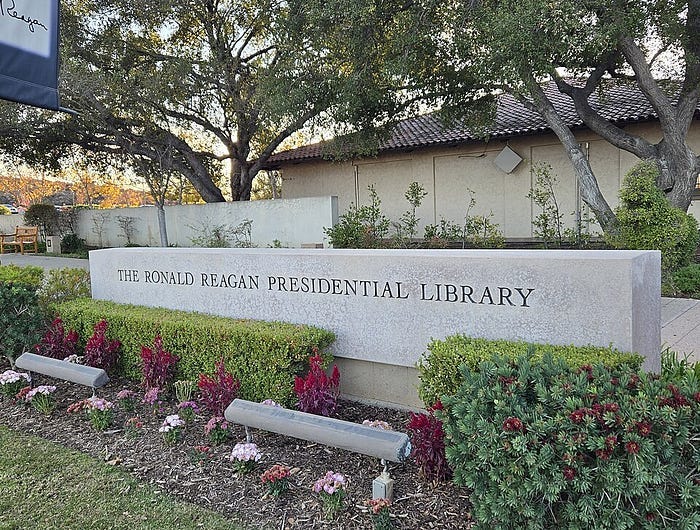
When I go to a library, the first thing I think of is checking out books. That’s not going to happen in any of the 13 official NARA‑administered presidential libraries. NARA is the National Archives and Records Administration, the federal agency responsible for preserving and providing access to the permanently valuable records of the U.S. government. Some people believe there are 14, 15, or even 16 Presidential libraries, but neither the Obama Presidential Center, the Obama Presidential Records Project, nor the Trump Presidential Records Project is included. More about that later.
The Obama Presidential Center is the only one NARA has not recognized. One criterion for NARA designation is whether a privately funded building was donated to the federal government for the library. The Nixon Library was not originally an official library until it donated its building. The Richard Nixon Library & Birthplace was dedicated on July 19, 1990. From 1990 to 2007, it operated as a private museum run by the Nixon Foundation. The unofficial status was never about Watergate, scandal, or his resignation. It was about the building and control.
The Obama Presidential Center is not wholly recognized because it used a different model. The Obama Foundation chose not to donate a building to the government. It is also the only library where you can check out a book. It incorporates a regular branch of the Chicago library system, providing library access to an underserved area of Chicago’s South Side. All presidential records are owned and maintained by the federal government. In the Obama model, only the federal records are federally maintained. In every other presidential library, the federal government maintains the entire facility.
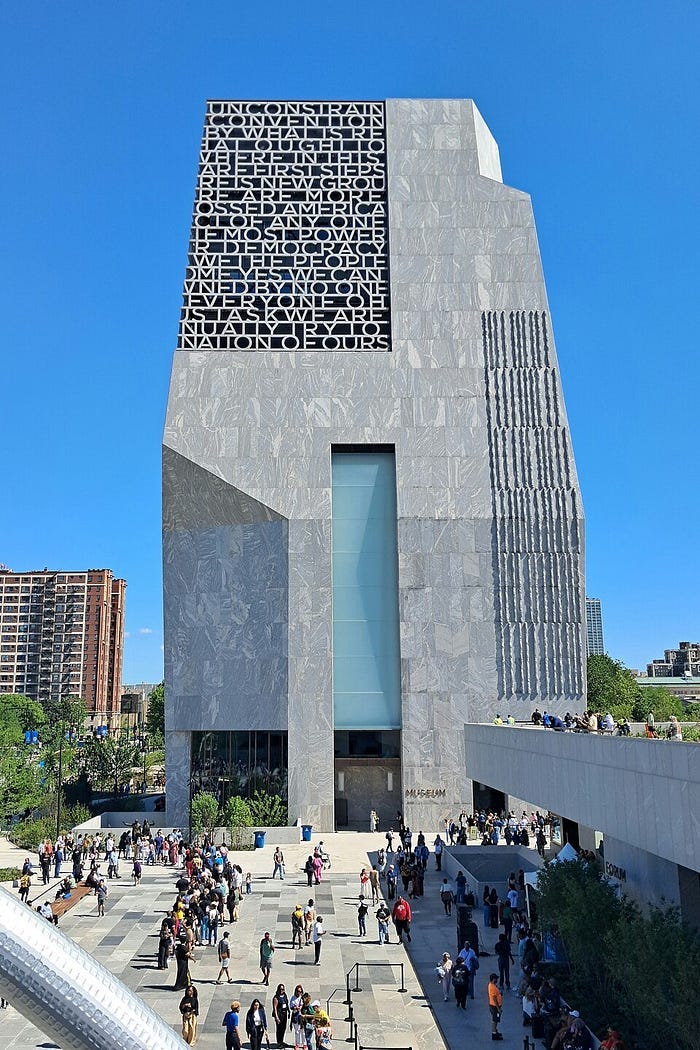
Obama Presidential Center — AlphaBeta135, CC0, via Wikimedia Commons
NARA doesn’t produce an itemized list of its spending by library. They only provide aggregate figures. Here are estimates based on public data of 2023 federal spending. Also included are the estimated annual costs for the recently opened Obama Presidential Records Project and the anticipated Trump Presidential Records Project.
Presidential Library | Estimated Federal Spending FY 2023
Herbert Hoover Library | $4.8M | Small facility; moderate visitation
Franklin D. Roosevelt Library | $7.2M | High archival load; older building
Harry S. Truman Library | $6.9M | Major renovation completed recently
Dwight D. Eisenhower Library | $6.4M | Large archival footprint
John F. Kennedy Library | $7.9M | Confirmed program obligations
Lyndon B. Johnson Library | $7.1M | High research usage
Richard Nixon Library | $7.6M | Large museum; federalized in 2007
Gerald R. Ford Library & Museum | $6.8M | Split-site operations (Ann Arbor + Grand Rapids)
Jimmy Carter Library | $6.3M | Moderate visitation; aging facility
Ronald Reagan Library | $7.9M | Confirmed program obligations; high visitation
George H. W. Bush Library | $6.7M | Large museum footprint
William J. Clinton Library | $7.4M | High digital archive load
George W. Bush Library | $7.8M | Newest traditional library; high security costs
Obama Presidential Records Project | $1.8M | Records only; no building maintenance
Trump Presidential Records Project | $1.2M | Records only; no building maintenance
The Obama model (no donated building, digital federal library + privately run museum) is widely expected to be the model going forward. Beginning in 2017, NARA formally announced that:
it would no longer require a foundation to build a presidential library
it would accept digital libraries without a physical museum
it would store records in NARA facilities, not in donated buildings
NARA’s language at the time:
“The Obama Presidential Library will be the first fully digital presidential library… This model may be used for future presidential libraries.”
This old model, with the donated-building costs, averages $6–8 million per library per year, plus a $123 million deferred maintenance backlog across the system.
By contrast:
Obama’s records-only model costs ~$1.8M/year
Trump’s records-only model costs ~$1.2M/year
NARA saves tens of millions over time when no building is donated.
Since (except for the Obama Presidential Center) no books are available to check out or peruse. What can you expect to find in a presidential library? Mainly exhibits and the government-owned presidential records. Presidential libraries do contain classified records, but only in secure NARA-controlled areas.
Every official NARA presidential library since 2007 includes:
SCIFs (Sensitive Compartmented Information Facilities)
secure archival storage rooms
restricted-access vaults
These areas are:
federally operated
federally secured
not accessible to the public
not part of the museum
staffed only by NARA personnel with clearances
Classified materials remain under federal custody even if the museum is operated in partnership with a foundation. Classified material is not stored in public museum spaces.
No presidential library:
displays classified material
stores classified material in public areas
allows foundation staff access to classified holdings
The museum side is essentially irrelevant to classified storage — only the federal archival side matters.
Because Obama did not donate a building:
The Obama Presidential Center has no federal archival facility
Therefore, no classified material is stored there
All classified Obama records are stored in NARA’s separate federal facility (Hoffman Estates, IL)
This is exactly why the Obama model is cheaper: No building → no SCIF → no federal maintenance → no classified storage obligations.
The planned Trump library will follow the Obama model in several respects. Trump has:
no donated building
no NARA-run museum
no federal library facility
All classified Trump records are stored in NARA-controlled secure facilities, not in any museum or private foundation space.
The Trump Presidential Library will differ from every previous presidential library in three fundamental ways: governance, architecture, and purpose.
Trump’s stated plan rejects the traditional model and, in many respects, the Obama model. He intends to self‑curate and maintain private control over the physical site, separating the museum from the federal archive. This is unprecedented.
Under the Presidential Records Act, Trump cannot own his official records — NARA already has legal custody. So a private Trump library must either:
negotiate a co‑location agreement with NARA, or
operate as a replica‑based museum using digitized copies.
No previous president has attempted this.
Most presidential libraries are:
horizontally oriented campuses
on hometown land or university grounds
built as civic institutions (e.g., LBJ at UT Austin, JFK in Boston)
Trump’s proposed library is:
a 1,047‑foot glass skyscraper
on a 2.6‑acre Miami waterfront plot
featuring gold accents, a replica Oval Office, a replica White House ballroom, and a full‑size presidential jet
potentially including a hotel and retail spaces
This is not a civic campus — it is a branded tower.
Trump wouldn’t be the first President with a full-sized plane. The Ronald Reagan Library obtained a complete Air Force One through a formal transfer from the Air Force after its retirement; other libraries have only small aircraft parts or none at all. Most retired Air Force Ones are transferred to military museums. Technically, the plane was loaned to the library and is still owned by the Air Force.
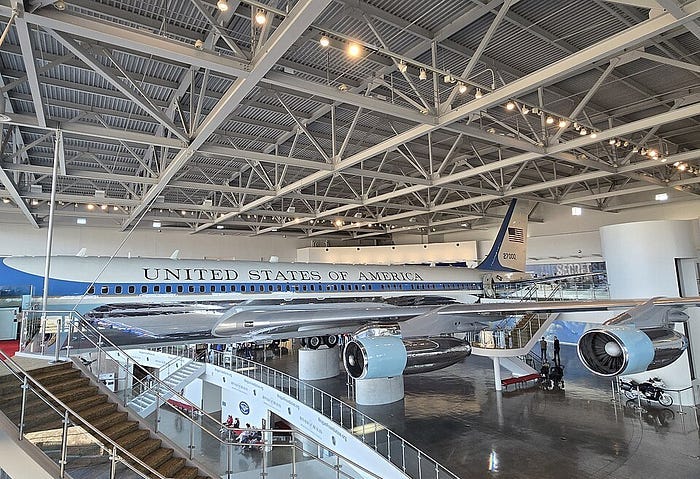
Spatms, CC BY-SA 4.0 <https://creativecommons.org/licenses/by-sa/4.0>, via Wikimedia Commons
The plane Trump wants to take with him to his library is the controversial Qatar-donated 747, which was unconditionally donated to the United States with no stipulation on what happens to the aircraft after Trump leaves office. The Trump plan calls for transferring ownership of the plane to the Trump Presidential Library Foundation.” This differs from the Reagan plane, still owned by the Air Force. It is estimated the federal government spent $200–350 million retrofitting the plane to meet minimum Air Force One standards.
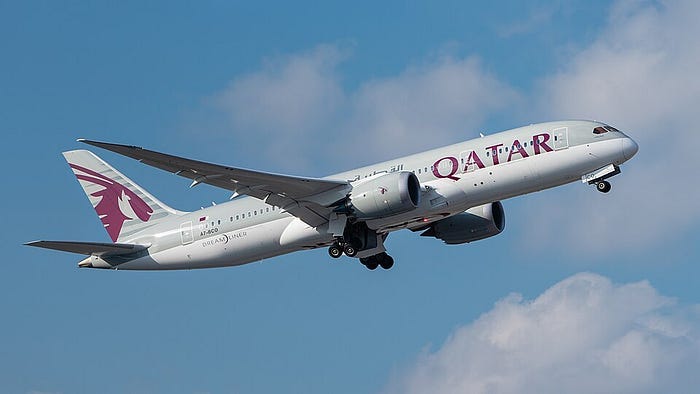
Julian Herzog, CC BY 4.0 <https://creativecommons.org/licenses/by/4.0>, via Wikimedia Commons
Because Trump has not donated a building to NARA, his library would follow the Obama model:
Federal government: keeps and maintains the records only
Trump Foundation / Trump Organization: owns and operates the museum, campus, hotel, and commercial spaces
This means all commercial revenue stays private — not federal. No federal law prohibits a presidential library foundation from operating a hotel, restaurant, or retail venue.
A nonprofit, not a business, operates the Obama Presidential Center. The Obama Foundation is a 501(c)(3) charitable organization. The Donald J. Trump Presidential Library Foundation, Inc. was formally incorporated in Florida as a not‑for‑profit corporation on May 23, 2025. Eric Trump, Michael Boulos, and James D. Kiley created it and serve as trustees. This foundation is designated to receive the Miami land intended for the library. Eric Trump was a board member of the Donald J Trump Foundation.
A New York judge required President Donald J. Trump to pay $2 million in damages to a group of charities after the attorney general’s office concluded the Trump Foundation had been used to further Mr. Trump’s political and business interests; reporting repeatedly describes that $2 million restitution as Trump’s payment and resolution of the primary civil case, with the money directed to eight charities.
The New York Attorney General’s office made mandatory training for Donald Trump Jr., Ivanka Trump, and Eric Trump part of the overall enforcement framework, requiring the three children to undergo instruction about the duties of charity officers and directors; multiple official accounts and press releases list the training requirement for the children rather than any individual financial sanction against them. Hopefully, Eric Trump will do better this time around.
The hotel associated with the Trump Library would be a for‑profit operation, with revenue flowing to Trump‑controlled entities through the nonprofit foundation or related business structures. A Trump‑run presidential library could sell MAGA and Trump‑related merchandise in its gift shop without restriction. Traditional NARA‑run presidential libraries cannot sell partisan political merchandise.
The Obama Foundation sells Obama-branded merchandise and political-themed items, with the proceeds going to its 501(c)(3) charitable nonprofit. Trump currently benefits personally from the sale of MAGA merchandise through The Trump Store. Do you think he’s going to stop profiting off merchandise sold in the library?
Several U.S. presidents have preserved or restored their personal homes outside the presidential‑library system. These sites function as historic house museums, private foundations, or privately owned residences, rather than as, or in addition to, NARA‑run libraries.
Presidents with major home restorations (outside the library system)
1. George Washington — Mount Vernon
Washington’s estate is not a presidential library; it is a privately operated historic site run by the Mount Vernon Ladies’ Association. It underwent a $40 million restoration and reopened in December 2025 with fully revitalized interiors and structural stabilization.
2. Abraham Lincoln — Reconstruction of his childhood log cabin
Lincoln’s early home is preserved as a reconstruction rather than a library. It is maintained as a historic site and museum, separate from the Lincoln Presidential Library (operated by the State of Illinois).
3. Chester A. Arthur — Sag Harbor Summer House
Arthur’s summer retreat at 20 Union Street in Sag Harbor is a historic residence that remains on the private market. It has undergone modern redesigns while retaining historical elements.
4. John F. Kennedy — Georgetown Townhouse
The Kennedy home in Georgetown (where JFK lived as a senator) has been renovated with “period‑authentic” millwork and modern upgrades. It remains a private residence and is not part of the Kennedy Library.
5. Thomas Jefferson — Monticello
Monticello, Thomas Jefferson’s mountaintop plantation in Albemarle County, Virginia, is a neoclassical estate he designed and redesigned over four decades, blending Palladian architecture with Enlightenment ideals. Perched 850 feet above the Piedmont landscape, it served as Jefferson’s primary residence, political retreat, and the center of a 5,000‑acre agricultural enterprise worked by enslaved people who lived and labored along Mulberry Row. I’ve been to Monticello, which has quite the gift shop.
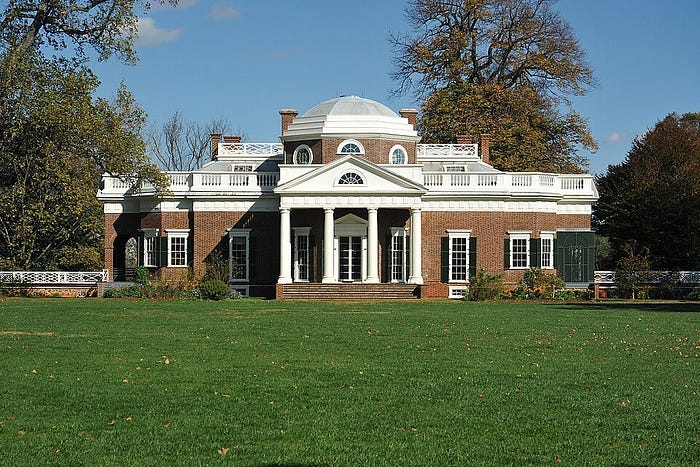
YF12s, CC BY-SA 3.0 <https://creativecommons.org/licenses/by-sa/3.0>, via Wikimedia Commons
The good news is that when visiting a Presidential library, you won’t need a library card or an appointment. The bad news is that only researchers and those with special clearances get to see most of the material. There will be a museum with exhibits that might include planes, desks, wax figures, and memorabilia. You can count on a gift shop including books about the president in question. The Trump Library would be the first presidential library complex to integrate a hotel into its design formally. All I can say is, hold onto your wallet or purse.
He really just can’t help himself, can he? (That’s rhetorical, no response required).
Wow! Visiting the Obama Presidential Library today!
Thanks Mr. Spivey for an in-depth view of Presidential Library history.